What is the role of auditory training in the aging auditory system
Dr. Brian Taylor talks with Professor Samira Anderson about what happens to auditory processing as we age, and how auditory training may improve the neural processes that support better listening.


Subscribe to our newsletter
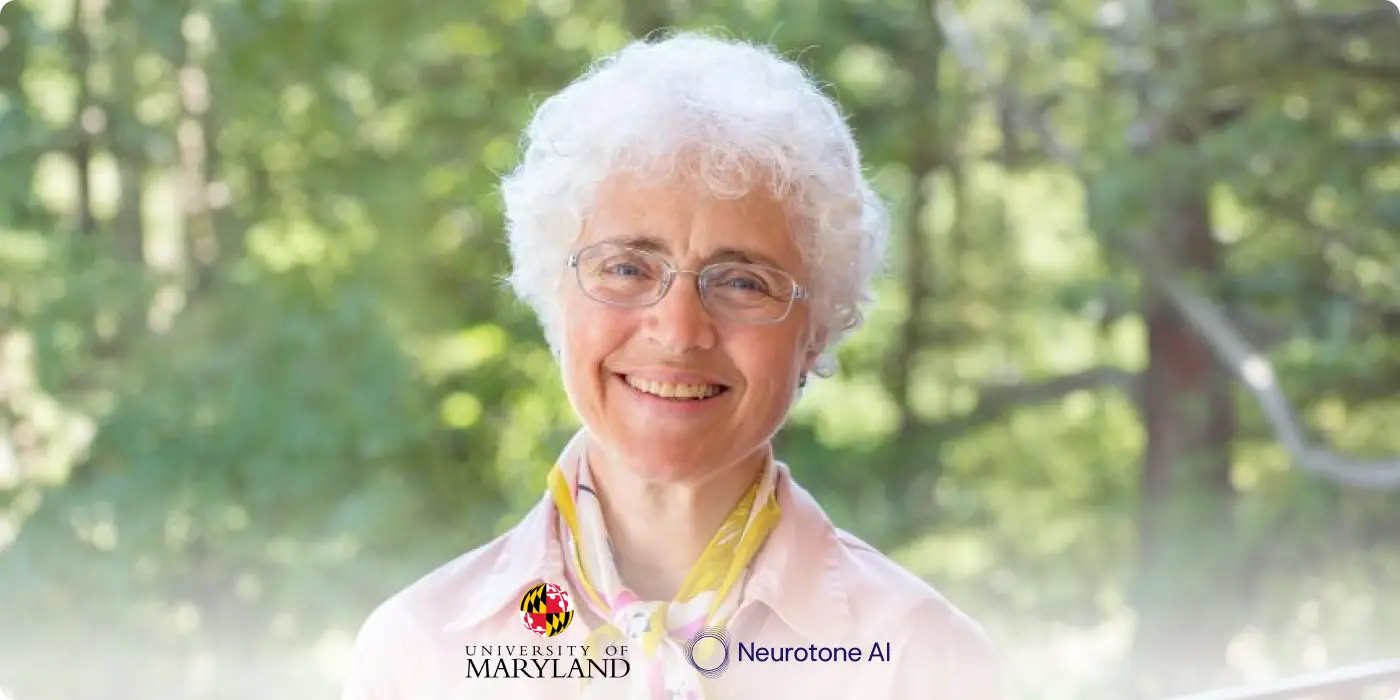
Dr. Brian Taylor talks with Professor Samira Anderson about what happens to auditory processing as we age, and how auditory training may improve the neural processes that support better listening.
Why do some older adults struggle to understand speech, particularly in challenging environments, even when the audiogram does not fully explain their difficulties? And if aging changes how sound is processed beyond the cochlea, can training help improve some of those underlying auditory processes?
To explore these questions, I sat down with Samira Anderson, AuD, PhD, Professor and Chair of the Department of Hearing and Speech Sciences (HESP) at the University of Maryland, College Park. Dr. Anderson spent 26 years as a clinical audiologist before becoming a neuroscientist, a career path driven in part by her observation that the audiogram alone often cannot predict real-world listening difficulties or hearing-aid benefit.
We discuss what happens throughout the auditory system as we age, why temporal processing is particularly vulnerable, and what her research tells us about the brain’s capacity to respond to auditory training. Dr. Anderson also shares what clinicians should know about training duration, auditory-cognitive training, and the role auditory training can play alongside hearing aids and other components of a comprehensive treatment plan.
Editor’s note: Dr. Anderson’s interview reinforces a familiar challenge in hearing care: an audiogram alone may not explain how someone manages everyday listening. Her research suggests auditory training can help address some aspects of auditory processing, while questions remain about how much training different listeners need. For clinicians, the takeaway is to consider training as one part of an individualized care plan, alongside appropriate hearing technology and communication support.
ABOUT DR. SAMIRA ANDERSON
Samira Anderson, Au.D., Ph.D. is a prominent neuroscientist, audiologist, and researcher who serves as a Professor and Chair of the Department of Hearing and Speech Sciences (HESP) at the University of Maryland, College Park. Known for her bridge between clinical practice and cutting-edge laboratory research, she was recently honored with the title of Distinguished University Professor in July 2026, the highest academic honor bestowed by the university. She is the co-author of the 2025 paper, Neural and Behavioral Changes in Older Adults from Auditory-Cognitive Training, published in bioRxiv. A copy of that paper can be downloaded here.
ABOUT DR. BRIAN TAYLOR
Dr. Brian Taylor is Vice President of Clinical Research and Professional Relations at Neurotone AI, where he leads efforts to expand clinical research, strengthen the evidence base for aural rehabilitation, and help providers integrate brain-based hearing care into everyday practice. A respected audiologist, educator, and researcher with nearly three decades of experience, Brian has built a reputation as one of the field’s leading voices on clinical care, hearing technology, and practice management.
Before joining Neurotone AI, Brian served as Senior Director of Audiology at Signia. He is also editor of Audiology Practices, editor-at-large for Hearing Health and Technology Matters, an adjunct instructor at the University of Wisconsin, and the author of several influential textbooks, including Audiology Practice Management. His work has long focused on helping hearing care professionals translate research into practical strategies that improve patient outcomes and practice performance.
BT: You have a remarkable career path. Tell us how you went from being a clinician to a neuroscientist and researcher.
SA: I worked as an audiologist for 26 years in a variety of settings, including private practice and medical clinics. I enjoyed working with patients, particularly those whom I followed over many years. My clinical work involved a broad range of services and patients across the lifespan, and the field of audiology evolved considerably during that time, which kept the work engaging.
Nevertheless, I had long been interested in research and thought I might pursue it under the right circumstances. A key motivation was my observation that an audiogram alone often cannot predict real-world listening difficulties or hearing-aid benefit. I wanted to better understand auditory processing beyond the cochlea and the factors that contribute to this variability.
After my children left for college, I discussed with my husband the possibility of leaving clinical practice to pursue a Ph.D. He was very supportive, so I applied to several graduate programs to explore the opportunity. I was encouraged by the responses I received and ultimately enrolled in Northwestern University’s Ph.D. program, where I worked with Dr. Nina Kraus. Her research aligned closely with my interests in identifying the neural mechanisms underlying hearing difficulties in challenging listening environments. After completing my Ph.D., I was fortunate to join the University of Maryland’s Department of Hearing and Speech Sciences as an assistant professor.
BT: Since 2013 you’ve been at the University of Maryland and Lab Director at The Hearing Brain Lab there. What is the focus of your work there?
SA: The central focus of my research is auditory aging. I approach this work from several perspectives: (1) investigating the neural basis of speech-perception difficulties in older adults; (2) identifying interventions that may promote neuroplasticity and ameliorate age-related deficits in auditory processing; and (3) optimizing hearing aids and cochlear implants to improve the benefit individuals receive from acoustic or electrical stimulation.
BT: I’d like to focus our attention on the aging auditory system. Many clinicians are familiar with the “normal” auditory system as one that combines bottom-up and top-down processing. Is that an accurate description? What would you add to that simple description to make it more precise?
SA: Yes, that is a useful description. The brain continuously monitors both the listening environment and incoming signals from the cochlea and auditory nerve, adapting its processing to optimize hearing under changing conditions. For example, when incoming auditory input is reduced, the brain may decrease inhibitory neurotransmission, thereby increasing overall neural excitability. There exists an extensive afferent/efferent system that allows different structures to communicate and modify processing based on changes that occur with aging or hearing loss and in the environment.
BT: What happens to the auditory system as we age, especially in the brainstem and auditory cortex?
SA: Age-related changes cascade throughout the auditory system. Even when outer hair-cell function appears normal, age-related synaptopathy and loss of auditory nerve fibers may reduce the auditory nerve’s ability to transmit the precise temporal information needed to encode speech clearly. Brainstem and midbrain responses are typically smaller in amplitude and show temporal-processing deficits, including increased response latency and decreased phase locking.
At early cortical levels, however, responses in older adults can be paradoxically larger than those of younger listeners. This increase likely reflects compensatory mechanisms responding to degraded input from the brainstem. As noted above, reduced inhibitory neurotransmission can produce larger neural responses. The brain may also recruit prefrontal and frontal cortical regions to help the listener interpret the incoming signal.
BT: How does auditory training partially reverse these aging effects?
SA: Older listeners are particularly vulnerable to declines in temporal processing.
Auditory training that requires attention to subtle differences in timing may therefore help to partially restore aspects of temporal processing.
BT: What research has your lab (or another lab) conducted that informs your understanding of this partial reversal?
SA: My laboratory and others have conducted studies that challenge older listeners with tasks involving subtle timing differences, such as rate-discrimination training, time-compressed speech, and speech-in-noise perception. In our rate-discrimination study (Anderson et al., JARO, 2022), training increased phase locking in brainstem and midbrain responses.
Moreover, the degree of change in phase locking was associated with improved recognition of reverberant speech. These findings suggest that a more precise neural representation of auditory signals contributes to training-related improvement.
BT: On average, how much training is needed for an individual to experience this partial reversal?
SA: This remains an open question. My dissertation study included 40 hours of auditory-cognitive training and found improvements in brainstem and midbrain responses, speech-in-noise performance, and memory. Because participants were not assessed at intermediate time points, however, we do not know how many hours of training were necessary for benefits to emerge.
In our 2022 study, nine hours of training were sufficient to induce changes in both perception and brainstem/midbrain responses. Other studies have found that improvements in recognizing time-compressed speech level off after approximately five or six sessions (Banai & Lavner, 2016). Sabin and Wright (2013) also found that older adults showed a longer learning time course than younger listeners. More research is needed to determine the optimal number of sessions for different groups of listeners.
BT: Why does auditory plus cognitive training seem to be most effective?
SA: It is not yet clear that combined auditory-cognitive training is consistently more effective than auditory-only training; this is an active area of research. Ferguson and Henshaw (2015) suggested that combined approaches may be especially beneficial because cognitive skills, including working memory, are important contributors to speech-in-noise understanding. Training that targets both auditory processing and the cognitive resources that support listening may therefore offer complementary benefits.
BT: Based on your experience as both a clinician and neuroscientist, how would you discuss or position auditory training as part of a comprehensive treatment plan with an older adult patient with age-related hearing loss?
SA: I would position auditory training as a potential complement to, rather than a replacement for, appropriate audiologic care. A comprehensive treatment plan should begin with a thorough assessment of hearing, communication needs, listening environments, and the individual’s goals. When indicated, hearing aids or other amplification technology remain central components of management, along with counseling and communication strategies.
For an older adult who continues to experience difficulty understanding speech in challenging environments, auditory training may be a useful adjunct. I would explain that training is intended to strengthen the listening and cognitive skills that support communication, particularly in noise or other complex settings.
Expectations should be realistic: benefits may vary across individuals, and sustained engagement is likely important.
The most appropriate plan is individualized and combines technology, education, communication strategies, and, when suitable, auditory training.